Showing posts with label Pico della Mirandola. Show all posts

Wednesday, September 14, 2011

Exit Pico

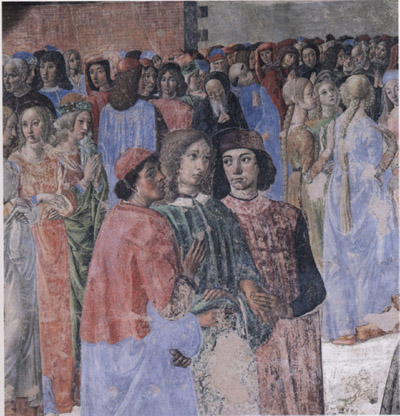
It's a Medici and co. bingo, baby, butter and beans birthday bash in Sandro Botticelli's "Adoration of the Magi" (1476)! Left in the foreground are (left to right) Lorenzo de' Medici, Angelo Poliziano and, who else, Pico! There's more of course, but I won't bother you with that. (That's cultivated tone for FIND IT OUT YOURSELF).

Ultimately, for Pico it is the entire human soul, posited at the centre of creation and partaking in every type of being, that is daimonic[1]. It is capable of informing itself regarding the numinous destiny of mankind, but it also needs to recognize its own uniqueness, which it does by a thorough understanding of the Christian revelation and Scripture. Pico thus both differs and agrees with traditional uses of the word “daimon”. On the one hand, ritual practices of meditation are aimed at the investigation of the celestial hierarchies, but on the other hand these hierarchies and spirits serve solely as models for the rational soul to emulate. The liberty of the human soul to move up and down the cosmic staircase of reality reflects Pico’s belief that man is not necessarily subjected to the wiles of fate but possesses the ability to take control of his own destiny. Essentially, Pico proposes that man can become part of God because human nature lacks the metaphysical principle of limitation that confines beings to one fixed mode of existence. Thus, we share in the same ontological freedom of God. That this freedom is inherent but still has to be attained, Pico makes clear in the necessity to take up his fourfold program of philosophy and by underlining the supernatural grace that we have received from Jesus.

If Pico’s beliefs come across as alien to us today, we would do well to remember that in the Renaissance the boundaries between the physical and the metaphysical were decidedly more porous than they are today. The strict opposition in quality between mind and body that Descartes introduced, and that in some form still pervades to this day, was not something that was considered in the premodern world. Even though Pico believed that the soul should release itself from the body in order to become one with God, he would have also maintained, like all Christians, that the soul would be reunited with the body at the end of time.  Pico’s aim at deification does not depend on a strict renunciation of the material reality, precisely because this dimension is as intrinsically important to human nature as its other components. The reality of material things had its origin the spiritual world and so the dualism that we adhere to in our own time was not even an  issue in those days. Spiritual substances and occult virtues and qualities accounted not only for the way in which nature worked, but also served as an important starting point through which religious truths could be deduced. For most philosophers, and especially Pico, theological meaning was the be-all/end-all of their work. Descartes may not have intended it, but his mechanical philosophy, together with the rise of mathematical science, gave way to a new understanding of nature, its being and its operation. Pico, however, was blissfully unaware of all this, and though many scholars have tried to claim him as an inevitable forebode of the rise of natural science, his proper place in the tumultuous world of the Renaissance is secure.

And even though Pico was no religious reformer, he did want to promote a new kind of spirituality free from strife and conflict. His proposed program of study and contemplation would help calm and assuage the fears and doubts of people, while working towards a new kind of peace for the soul built on natural magic and the true felicity of God.

There! Don’t you feel intellectually mollified and mentally appeased! Now you can finally look in the mirror again and don’t feel the overwhelming urge to publically chastise yourself and humbly prostrate your inapt person before the grand altar of this Blog (capital B for “cosmic revelatory quality”, natch!), although you might want to continue doing that, because next time is going to be the start of something great and unbelievable! Be here as I will take this blog into new spheres of heavenly excellence and fresh, unexpected territories!


[1] Well, you know, this paper was written for a conference called “Daimonic Imagination, Uncanny Intelligence”. Did I even bother to explain what it exactly is? Anyway, in ancient days daimons were divine/semi-divine entities that were responsible for the intellectual and spiritual guidance of people. Of course today we don’t need that anymore, because my blog wholly provides for mankind in this immense and unfailing task. I used the word “daimonic” to signify Pico’s view of the human soul as capable of transcending the material bounds of nature and spiritually illuminating itself. But your soul cannot do this, otherwise you would not be here.....

Tuesday, September 13, 2011

End In Sight

Edit: Apparently I had already used the image that was here first, and even though my caption was mildly entertaining, I chose to take it away. All for your continued enjoyment and spiritual purification. I aim to please.

There is much more of this sort of spiritual arithmetic (the technique was normally called gematria) to be found in Kabbalah that strengthened Pico in his belief that it was the most holy practice of magic, and in fact formed the groundwork for the miracles of Christ. Language is the most potent part of magic, because it is God’s speech that informs and moves nature, and magic has power only in so far as it is shaped by God’s voice. But not only letters and numbers were important, also the shapes of letters (some Hebrew letters had to be either “open” or “closed” depending on their position in a word or sentence) served to confirm the awesome divinity of the Torah and God. A blueprint for Pico’s own theory of deification could also be found in Kabbalah. After all, it was the apocryphal Enoch who was turned into the “angel of divinity” Metatron according to the Kabbalists and Pico refers to this when discussing the possibility of being reborn into the world of the intellect as an angel after dying in the sensible world.

Nevertheless, also the Kabbalist had to be careful to practise his gematria in a pious manner, for those who failed to do this would be pounced upon by the fallen angel Azazel, who for Pico symbolized the unclean forces in our reality. The mystical union that Pico espoused, and wanted to make known to the theological world in Rome in 1487, runs like a thread throughout his work and finds it origin for an important part in the Kabbalah. Pico’s theses are replete with numerological symbolism (the final section consists of 72 conclusions), as are other works such as Heptaplus and On Being and the One (1491). The number 900 is no coincidence therefore, because for Pico it was “the symbol of the excited soul turning back into itself through the frenzy of the muses”, as he gushes in a letter to Benivieni. It had driven Pico to meditate on the passage of the Gospel of John which foretells the coming of the Holy Spirit and the peace and enlightenment it will bring along with it. This peace was what Pico wanted to establish trough his Christo-syncretic reading of all cultures, and bring to its spiritual end through the death of the kiss.
           
Pico’s methodology was thus fully pious in its aims and practices. Through Kabbalah Pico believed to have recovered the true path towards union with God. Furthermore, it is the rational soul that makes mystical union possible and by taking its inspiration from revelation and careful contemplation this defining part of human nature can properly ascend the heavenly ladder by imitating the angels that are part of the divine intellect illuminating man. However, the intellect is both something inherent to human beings, as we have seen, and a higher level of reality which beckons and inspires us. Imaginative and meditative practice on this reality, and the material world as well, is necessary to recognize our own share in divinity. Moral philosophy, dialectic, natural philosophy and theology, then, are the proper steps to take when we want to begin the journey towards holy unification.

The activation of the intellect, however, is no easy affair. It relies on a total disengagement from the senses (indeed, we have to leave the entire body behind) and can only be attempted by those sufficiently enlightened. The life of the angels is therefore exemplary. By imitating them and calling on their power, our rational soul can break free from the body and reach into the sphere of the intellect. But as much as Pico stresses the need to mimic the ways of the angels, we eventually move upwards by our own strength, as we possess everything necessary to do so already by ourselves. Moreover, even though the angels may be the inhabitants of a higher plane of reality, this does not mean that they are higher in the cosmic hierarchy than humans. As Pico cautions, angels do not exist by themselves and also do not understand by themselves.  They draw their being, life and perfection from God, and as such they only participate in being.

So even though angels illuminate our soul, we are eventually elevated over them by way of Jesus Christ. As Jesus was the full embodiment of divinity we possess the grace to go beyond the angels and become one with being itself. So as the rational soul is the instrument through which we can cultivate our imagination and rise to God, the intellect that informs it is both a spiritual force coming from within as well as without.

Hang in there, overzealous wisdom herbivores! Next thursday the concluding chapter of the Pico-saga, and then we will move on to higher planes of understanding and intelligence!

Sunday, September 11, 2011

Keep On Pico-ing

The graves of Pico della Mirandola and Angelo Poliziano at the church of San Marco, Florence. Below a statue of Girolamo Savonarola.
 
From Saint Paul (actually Pseudo-Dionysius, who in that time was generally taken to be  Dionysius the judge of Athens who was converted by Saint Paul in Acts 17:34[1]) Pico takes his cue on the activity of the cherubim who are purged and illuminated prior to being perfected. Continuing, he recounts the dream that the patriarch Jacob had of the ladder to heaven, with angels moving up and down its steps, while on the run from his brother Esau. If we want to be able to tread on this ladder, Pico says, we have to make sure we are pure, because it is sacrilege to touch that which is holy with dirty feet or unwashed hands. So first, we have to purge ourselves of moral impurities like base desires and sensual passions through the study of moral philosophy. Second, to be able to move freely to and from the various rings of existence, we have to dispel our ignorance and train our sense of reason to properly recognize truth and deception through dialectic. Third, we have to study natural philosophy, in order to come to a closer understanding of the wonders of nature and the workings of God. This is an important step, because at the heart of religion is the “assiduous contemplation of the wonders of God.” Finally, after completing these three steps one is fully prepared for theology, the knowledge of divine things, which in turn will lead to ultimate peace by way of the annihilation of the one in the eternal Source of all existence.

Pico thus proposes a regimen that mirrors the Cherubic way of life, purifying, illuminating and perfecting the human soul, and eventually mimics the Seraphic state of being, namely total consummation in the Godhead. The goal for Pico is the Kabbalistic “death of the kiss”, an ecstatic state whereby the soul has freed itself of its material bonds and becomes one with immaterial nature.
           
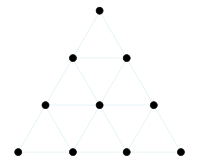
Now what were the practical ways of achieving this? The easy answer would be to study copiously everything that Pico had done, as the clarification of his methods aims for a large part at its subsequent justification. In fact, there is already an important dimension to be found in the quadripartite division of Pico’s curriculum. Such a fourfold structure recalls the Pythagorean tetractys, a triangular figure consisting of ten dots spread across four rows, descending (or ascending) from four to three to two to one, and a cosmic symbol of considerable spiritual power. The figure of the tetractys can become an important medium for contemplative practice or an amulet of magical power when infused with numerological exercises and juggling with Hebrew letters, pet subjects of the Kabbalah. Hebrew, as the original language of the Bible and by extension God, is therefore the proper instrument through which this kind of natural magic should be conducted. Here the allure of Kabbalah to Pico starts to become clear: letters, words, phrases and numbers are at the core of this mystical tradition, and since every letter of the Hebrew alphabet has a numerological value, the potential to derive hidden meanings from Scripture by calculating the arithmetic of holy names and utterances becomes virtually limitless.

Example of a "tetractys"


Devotees of the Kabbalah considered Hebrew letters to be the roots of the universe (in the end, it is through speech that everything is created in Genesis 1), and so their alterations and interchangeability with each other and the names of God was a prime ritual of meditative ecstasy. Moreover, in Pico’s day many Christians were concerned with words and meanings as they were found in the Bible. Biblical language was thought to not only work in a descriptive way, but also as the grounds on which the reality of things was built: words signified the objects that they were.

For Jews the most holy name of God was the Tetragrammaton (YHWH), strictly forbidden to be uttered and consisting of the letters yodh (×™), he (×”), waw (ו), he. These letters corresponded respectively to the numerical values of  10, 5, and 6, thus giving a total value of the name as 26. However, such simple arithmetic did not sufficiently satisfy the mystic and to cumulatively add the numbers (10 (yodh) +10+5 (yodh & he), and so on), carried even more spiritual power, yielding the total of 72, which related to the number of letters that made up the true name of God and which only the most skilled Kabbalist could hope to discover . Going further still, to represent the letters in the tetractys splendidly confirmed the sacred unity of the name. Putting yodh at the first four points results in 40 (10+10+10+10), he at the second three in 15, waw at the third row of two in 12 and he again at the last point simply makes up 5. Adding these together then, amounted again to 72. Cue divine frenzy and spiritual illumination. 

 Tetractys with the Tetragrammaton. Man, did you wish you had payed better attention to what I wrote instead of just glaring at the pretty pictures.

Still hanging in there? I’m wrapping this one up pretty soon so that you can begin to bathe in the heavenly glory of my unimaginable (save by he who has experienced the proper mode of spiritual electrifying illumination; you know, like John Travolta...) brilliance post-haste!


[1] Remember that question you had 4 days back about who the hell this guy was? Answered!

Friday, September 9, 2011

On The Soul & Kidnapping

Part of a fresco from the church of San Ambrogio in Firenze, depicting Pico as he's being flanked by his jolly good friends Angelo Poliziano and Marsilio Ficino. I gotta tell ya, it's getting harder and harder to find decent pictures of the guy....

Though Pico’s ontology of the human species is not always consistent, it does follow a certain kind of inner logic. For example, in his earliest written work, a commentary on his friend Girolamo Benivieni’s poem Canzone d’Amore[1], Pico distinguishes between four specific parts that make up the human soul: the vegetative, the sensitive, the rational, and the intellectual. The Oration, written shortly afterward in this period of exceptional productivity that Pico would never again match, confirms this fourfold division, while stressing that it is the unity of man which participates in the nature and essence of all creation that allows him to be “made one with God.”

In the Heptaplus Pico lays out a more elaborate scheme of human nature, consisting of (1) the mortal body; (2) the rational soul; (3) an intervening spirit which serves to connect the soul and the body; (4) the intermediate sensual part we share with the brutes; and (5) the intelligence we share with the angels. Elsewhere in the Heptaplus Pico describes man as being made up of “a body compounded from the elements, and a heavenly spirit, and the vegetative soul of plants, and the sense of brutes, and reason, and the angelic mind, and the likeness of God.” What Pico thus identifies as essential in a human being are the characteristics we share with beings higher than ourselves (angels) and creatures on a lower step of the ladder (plants, animals), those characteristics being the intellect in the case of angels, and the vegetative soul and senses in the case of lower beings. Sometimes Pico mentions these last two together and sometimes not, being content to simply point out that we have something in common with higher as well as lower nature.

Furthermore, there is the unity of God that we emulate, and through which we are able to ultimately achieve the desired deification. Specifically, it is through Jesus Christ that the invisible God is united with His creation. The spirit that Pico talks about seems to be the spirit of life (Pico also equates it with “light”), since without it the heavens could not impart the benefits of life and motion on us. What peculiar to the human being is the rational soul, and it is through this faculty that henosis (A Neoplatonic term connoting union with the One or the ultimate Source) is achieved.

Pico departs from the accepted Aristotelian and scholastic notions which hold that reason is the highest faculty of the soul and follows the Platonists in positing an intellectual or angelic part above the rational. Through this distinction Pico is able to adhere to the Averroistic’ notion of the unicity of the intellect.[2] The Arabic philosopher Averroes (Ibn Rushd, 1126-1198) became quite notorious in the Renaissance with his theory that there is only one shared intellect for all human beings, which caused many disputes among philosophers regarding the perceived merit of this theorem. Philosophically, it was quite attractive, for it could explain the universality of intellectual knowledge, but theologically it was untenable, because it seemed to imply that there was no personal immortality after the death of the material body. Such a matter was central to Renaissance philosophy, because it touched on major questions like the eternity of truth and the capacity of the human mind to grasp this, and the way to account for human behaviour and morality.

The immortality of the soul, the defining mark of humanity, was essential to the salvation of mankind and demonstrates the inescapable link between philosophy and theology, the former often working to strengthen the latter. By positing the rational soul as the fundamental feature of human nature, Pico handily circumvents this problem. The rational soul, the medium trough which we reach to God, is personal and immortal, while the intellect provides reason with the impulse to reach above itself and strive to unity with God. What Pico thus seems to postulate is that the divine intellect illumines our soul, which eventually endeavours to go even beyond this and reach its ultimate source, God.
           
But as stated before, owing to the pull of sensual appetites the rational soul will not climb upwards to the highest chambers of heaven by its own accord, but needs to be expressly cultivated and Pico proposes a rigorous program for this. After all, “nothing can rise above itself by relying on its own strength” (Heptaplus), and the person attempting to do so has to be sagacious and morally worthy. The count of Mirandola therefore draws up a four part program, echoing the doctrines of the psychological, moral, mystical and ritual aims of philosophy expounded by Neoplatonists and early Church Fathers such as Clement of Alexandria. Simply put, we have to “compete with the angels in dignity and glory” and emulate the ways of highest three orders of angels, namely the Thrones, Cherubim and Seraphim. So we have to be of worthy opinion like the throne, who “stands in steadfastness of judgment”; of contemplative insight as the cherub, who “shines with the radiance of intelligence”; and finally, of proper dedication and love for God like the seraph, who “burns with the fire of charity” (all quotes from the Oration, as if you hadn’t guessed). Pico then moves to illustrate his curriculum by example of Saint Paul and Jacob, and fortifies it by showing its continuity with many other traditions of wisdom, such as that of the Pythagoreans, Plato and the Chaldeans.

Wow. We’re heading into truly glorious abodes now. Better wear some sunglasses or something like that next time so as not to be blinded by the sheer and utter brilliance erupting from you screen! Hoho.


[1] Pico composed this work between 10 May 1486 and 10 September 1486, after he had tried to kidnap a certain Margherita, a wealthy widow who had just remarried a minor de’Medici, but a Medici nonetheless, in Arezzo. Accounts on Margherita’s supposed willingness vary (Pico’s sister swore the lady followed her brother voluntarily), but in any case the young count was caught right before reaching Siena and was lucky to escape with his life. Pico’s retinue was not so lucky however, as some eye-witnesses held that eighteen of his men bit the dust following the reckless episode. All the same, Lorenzo de’Medici was quick to forgive this crime and Pico returned with a pious zeal to his studies.
[2] Pico states this adherence in theses 2>73 & 3>67-69. Actually belonging to the 400 statements that he presented as “not his own”, Pico amplifies Averroes’ claims in such a way as to make them his personal interpretation and it seems likely that he intended to demonstrate the concord of Averroes with Aristotelianism and Christianity.

Wednesday, September 7, 2011

Train Kept A Rollin'

Luigi Mussini, "Birthday and Parentalia of Plato, Celebrated at Villa di Careggi by Lorenzo the Magnificent", 1862. Pico can be seen in the background with his arm over the shoulder of one his philosophical sparring buddies (probably Angelo Poliziano). If you look closely you can see me standing over there by the fig tree.........no just kidding, I wasn't even born then.

All this we should keep in mind when we approach Pico’s method of philosophy and its ultimate aim of reconciling man with his divine origin. Pico’s cosmology consisted of a tripartite, or rather quadripartite structure in which all levels of reality are interlinked and each world reflects the other, although in varying degrees of perfection and fulfilment. At the highest level there is the angelic or intelligible realm, where the angels dwell and where the eternal fire of the seraphic[1] intellect burns with love for God. Below that, there is the celestial world containing all the planets, and at the bottom the sublunary world of the plants and animals which we also inhabit. God presides over the angelic domain, but at the same time he transcends it, for God is the foundation of existence out of which everything else emanates, the act of existence itself.[2]

However, there is also a fourth world which incorporates all the elements found in the others and has the ability to infringe on the terrain of all the others. This is man himself, who moreover possesses the unity and likeness of God, through which he may aspire to journey back to the godly source of existence. But man is not only the fourth world, he is also the “bond and union” of the others, and as God contains all things in himself as their origin, man contains all things in himself as their center. What Pico is thus trying to establish is the ontological supremacy of man, which consists not only of material finiteness but of incorporeal immutability as well. So when Pico adds his own episode to the creation story of Genesis in the Oration, he does so with the express purpose of justifying his idiosyncratic theurgical methods and theological opinions.

“Thou, like a judge appointed for being honourable, art the molder and maker of thyself; thou mayest sculpt thyself into whatever shape thou dost prefer. Thou canst grow downward into the lower natures which are brutes. Thou canst again grow upward from thy soul’s reason into the higher natures which are divine.”

If we are to believe Pico this is part of the speech God gave to Adam before sending him out into the world and it forms the groundwork for Pico’s subsequent philosophizing on the nature of man and his desired goals. As stated before, for Pico the ultimate source of felicity in human life consists of attaining mystical union with God, a sort of blissful ecstasy of deification in which a supernatural salvation and regeneration of the soul is obtained. There is some matter of dispute as to whether Pico meant this salvation to be personal or collective, owing to the question of Pico’s supposedly millenarian speculations on the rapidly approaching end of world, fuelled by the ominous looming of the year 1500, which was just around the corner, and perhaps also by Savonarola’s fulminating sermons. Farmer[3] interprets Pico’s work, especially the 900 theses and the Oration, as a covert plan of grand cosmic resurgence in which mankind was to be prepared for its final marriage with Christ on the eve of the Second Coming. However, Pico himself remains ambivalent on this point and we cannot know for certain. It seems more likely that Pico had in mind an individual program of philosophical preparation owing to the fact that he repeatedly stresses the importance of keeping the true religion secret and the necessity of moral and ethical purification before even attempting a mystical ascent.
           
Nevertheless, this does not mean that we should disregard the power that an event like the Second Coming could have on Pico’s mind. Pico was strictly orthodox in his faith, and there was something that drew him to Savonarola’s repeating claims of painting the invasion of Charles VIII as a punishment sent by God to eliminate moral laxity in the Church, so far that Pico forsook his worldly possessions, denounced his earlier forays into poetry and Egyptian and Chaldean (the presumed teachings of Zoroaster) wisdom and donned the black and white robes belonging to the Dominican order of which Savonarola was head in Florence. When Pico died, most certainly by poisoning, Savonarola delivered his eulogy and he was buried in the church of San Marco, the stronghold of Savonarola’s enterprise.

What emerges from all this, is the point that Pico was no religious radical, but a man perfectly in tune with the prevalent beliefs of his surroundings. But what made him unique however, was his elaborate scheme, replete with Kabbalah, of spiritual ascension as regards the moral and religious duty of man. According to Pico, the prerequisites of  this endeavour are grounded in knowledge and understanding. As creatures with the capability to move between different natures, we are able to view the world from different perspectives and judge the merit and ethical worth of each one. Even so, the most worthy choice is to aspire to God, and not to debase oneself to the lower nature of the “brutes”, the plants and animals. This is an important point to remember. Pico repeatedly stresses the fact that there is a tension inherent in the rational soul to either gravitate toward “bestial” sensation or angelic intellect. The soul of man is posed at an intermediate level between the senses, signified by appetite, and the intellect, symbolizing will. We are thus either pulled down to the level of the brutes or lifted up to the supreme abodes of the angelic intellect, depending either on our desire to satisfy our basic urges or our need for spiritual contemplation.

Oof! And there's still more coming! With a heave, and a ho!


[1] Pico adheres to Pseudo-Dionysius’s division of the 9 angelic hierarchies with the top 3 consisting of the Seraphim, Cherubim and Thrones. Who’s Pseudo-Dionysius, you say? Good question.
[2] See Pico, “On Being and the One”: “For God, who is the plenitude of all existence, is of this nature. He alone is of himself, and from him alone, with no interposing medium, all things proceed to existence.”
[3] Some guy who wrote a book about Pico’s 900 Theses. If you’re him: I liked the book, man. Really.